When tradition becomes exclusion, and why evolution matters.
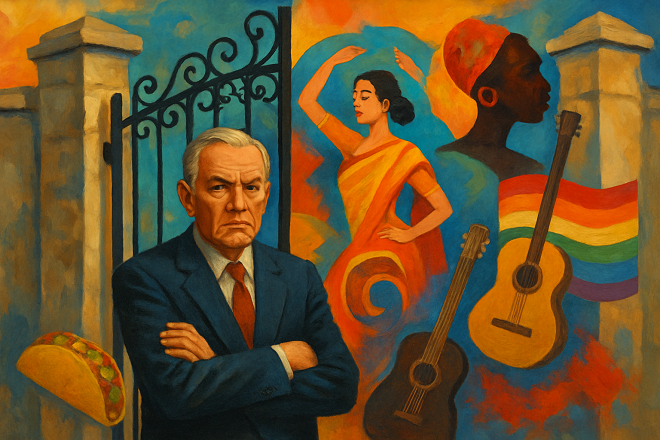
There’s a special kind of irony in becoming the self-appointed bouncer of culture. Like a man standing at the gates of an ever-expanding city shouting, “Only the old blueprints count!” — unaware the city has already built high-rises, subways, and rooftop bars without him.
Welcome to the paradox of cultural gatekeeping: a well-intentioned desire to preserve tradition that somehow morphs into a weapon of exclusion. A practice rooted in pride, but often delivered with a side of snobbery. And sometimes? A complete misunderstanding of what culture is supposed to do.
Let’s talk about how we got here — and why it might be time to retire the velvet rope.
What Is Cultural Gatekeeping, Anyway?
Cultural gatekeeping is the practice of controlling who is allowed to participate in, adapt, or be seen as a “true” part of a cultural tradition. You see it when someone says:
“You can’t cook that dish unless you’re from this country.”
“You’re not a real fan unless you’ve been listening since the underground days.”
“That’s not how it’s supposed to be worn/danced/sung/written!”
Sometimes the intention is preservation — keeping the culture from being diluted or misrepresented. Fair. Cultures have been stolen, twisted, and flattened by colonizers, marketers, and influencers alike.
But sometimes, gatekeeping just looks like pride turning into elitism. It becomes less about protecting culture, and more about controlling access.
The Myth of Purity in a Melting Pot World
Here’s the big secret gatekeepers don’t want to admit: no culture is pure.
Not Indian. Not Italian. Not African-American. Not even French.
Cuisines, languages, music, fashion — they’ve all been evolving since forever. The samosa? Persian roots. The tomato in Italian cooking? A Mexican immigrant. Jazz? Born from African, Caribbean, and European traditions smashing together in the American South. The sari? Evolved endlessly from drapes to stitched hybrids with zippers.
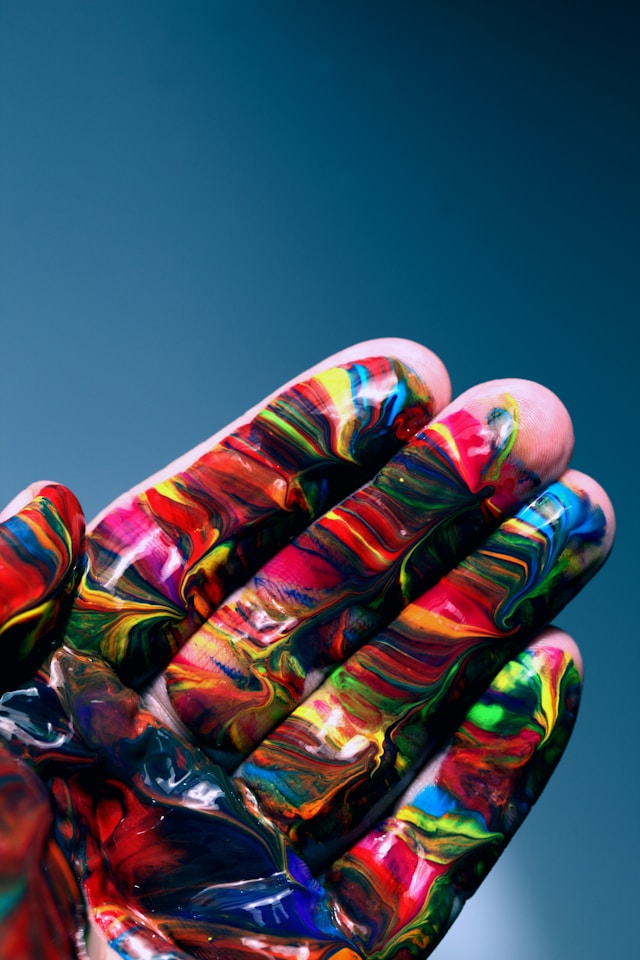
Culture isn’t a museum piece. It’s a jazz improv. It absorbs, responds, and reinvents.
Trying to freeze culture in time is like trying to copyright the wind. It moves on, with or without your approval.
When Protection Becomes Policing
Of course, there’s a line. Cultural appropriation is real — especially when dominant cultures adopt elements of marginalized cultures for profit, without credit, context, or respect.
But the problem arises when any borrowing or blending is labeled theft — when collaboration is punished, and curiosity is discouraged.
We’ve seen Black creators gatekept out of yoga studios. Asian-American chefs criticized for cooking “inauthentic” versions of their homeland’s food. Indigenous youth mocked for dressing traditionally in public, while the same style hits Coachella as haute couture.
Cultural protection is vital — but so is cultural participation. One without the other leads to walls, not bridges.
Tradition vs. Evolution: A False Binary
Here’s a hard truth: If your tradition can’t survive contact with the modern world, maybe it’s not the world that’s the problem.
Every culture worth its salt knows how to evolve. That’s not dilution. That’s resilience.
Hip-hop survived because it evolved. Classical Indian dance continues because new generations reinterpret it. Languages like Hebrew were revived from near extinction by adapting to contemporary life.
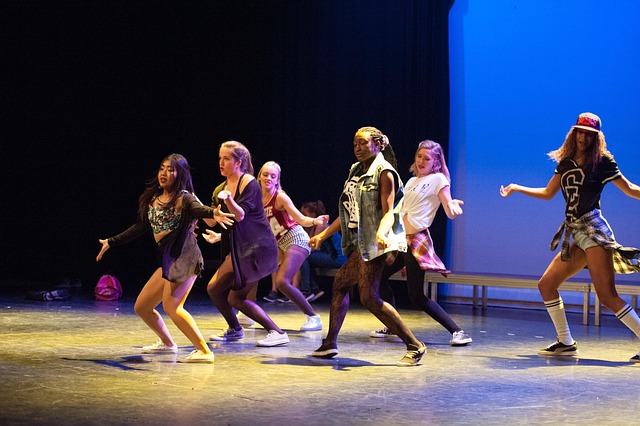
The healthiest cultures are porous, not paranoid. They let light in. They let new voices speak.
And they understand that honoring the past doesn’t require exiling the future.
Wit Meets Wisdom: Some Real-World Ironies
- Purists who reject “fusion food” forget that their grandmother’s curry probably included chilies — which came from the Americas in the 1500s.
- Those who mock non-native speakers often forget their own language is stitched together from invaders, immigrants, and empire.
- Fans who ridicule new generations for “not getting it” often ignore the fact that the original creators were once rebels too.
Gatekeeping is often just forgetting history while claiming to defend it.
What Happens When We Let Go of the Gates?
When we stop gatekeeping, culture becomes a conversation, not a courtroom.
- A Korean chef can add kimchi to tacos and spark a global street food revolution.
- A Black ballet dancer can perform Swan Lake and reclaim a space once deemed exclusive.
- A queer folk singer can reinterpret a centuries-old ballad and give it new, aching meaning.
When the gates come down, culture doesn’t disappear. It dances. It grows. It laughs at itself. It becomes alive.
The Point Is Not to Keep, But to Connect
In the end, the point of culture isn’t to build fences. It’s to build meaning — across time, space, and human experience.
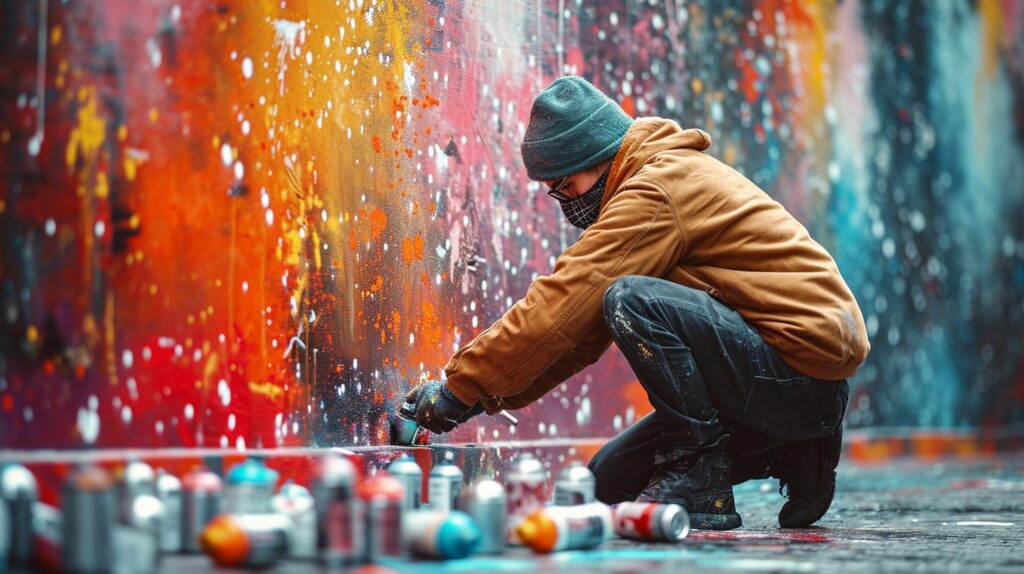
So by all means, honor your tradition. Know your roots. Pass down the stories, the songs, the rituals. But don’t confuse tradition with territory.
Gatekeeping might give you a sense of control.
But openness? That gives culture a future.
References & Further Reading
- Appiah, K. A. (2018). The Lies That Bind: Rethinking Identity. Liveright Publishing.
- García, L. (2021). “Who Gets to Cook What? Cultural Appropriation in the Kitchen.” The New York Times.
- hooks, bell. (1992). Black Looks: Race and Representation. South End Press.
- Nayar, P. K. (2013). Postcolonial Literature: An Introduction. Pearson.
- Taylor, C. (1994). “The Politics of Recognition.” In Multiculturalism, edited by Amy Gutmann. Princeton University Press.
- Tandoh, Ruby. (2018). “Eat What You Want.” The Guardian.
- UNESCO. (2003). Convention for the Safeguarding of Intangible Cultural Heritage.
- Zolberg, V. L. (1990). Constructing a Sociology of the Arts. Cambridge University Press.